Black Mulberry in Scandinavia, USDA zone 7
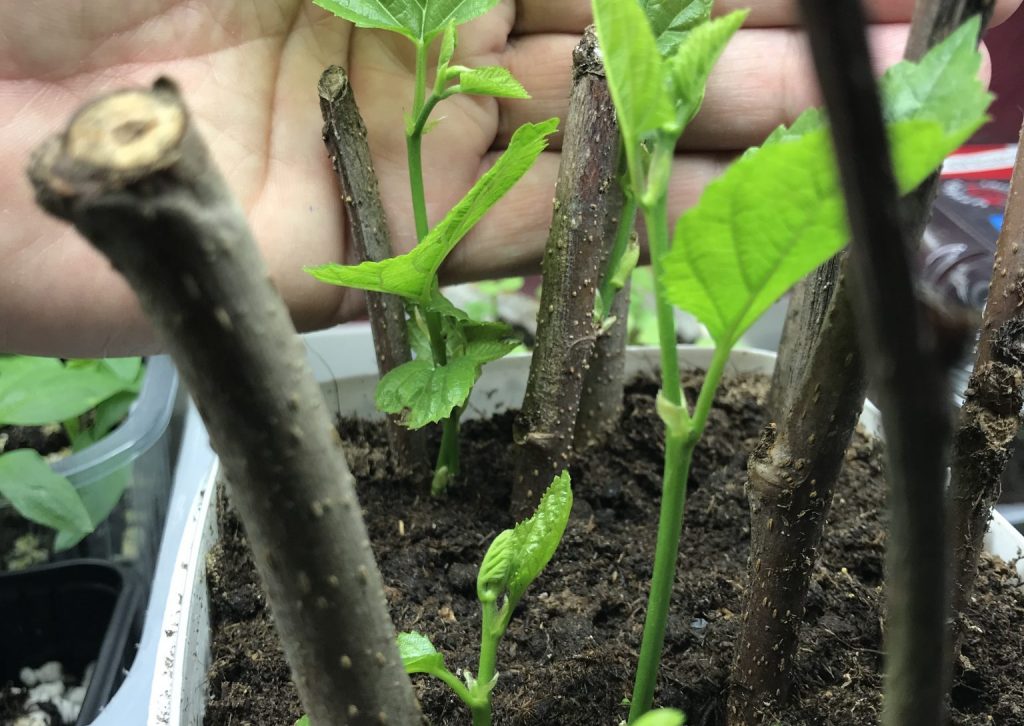
Mulberry, all variants, are not common at all where I live, Norway (southwestern part), but I wanted to see if I could get them to thrive here, it’s exciting to get things to succeed, but even more so if it’s something new.
So I did some research and decided that Black Mulberry (Morus nigra) might be a good choice.

I ordered some black mulberry cuttings from an eBay seller and they arrived well-packed. I had great success when it came to germination, but I was a bit impatient and transplanted two of them too early, got a couple of nights with frost. All leaves fell off, but I’m not quite certain they died.
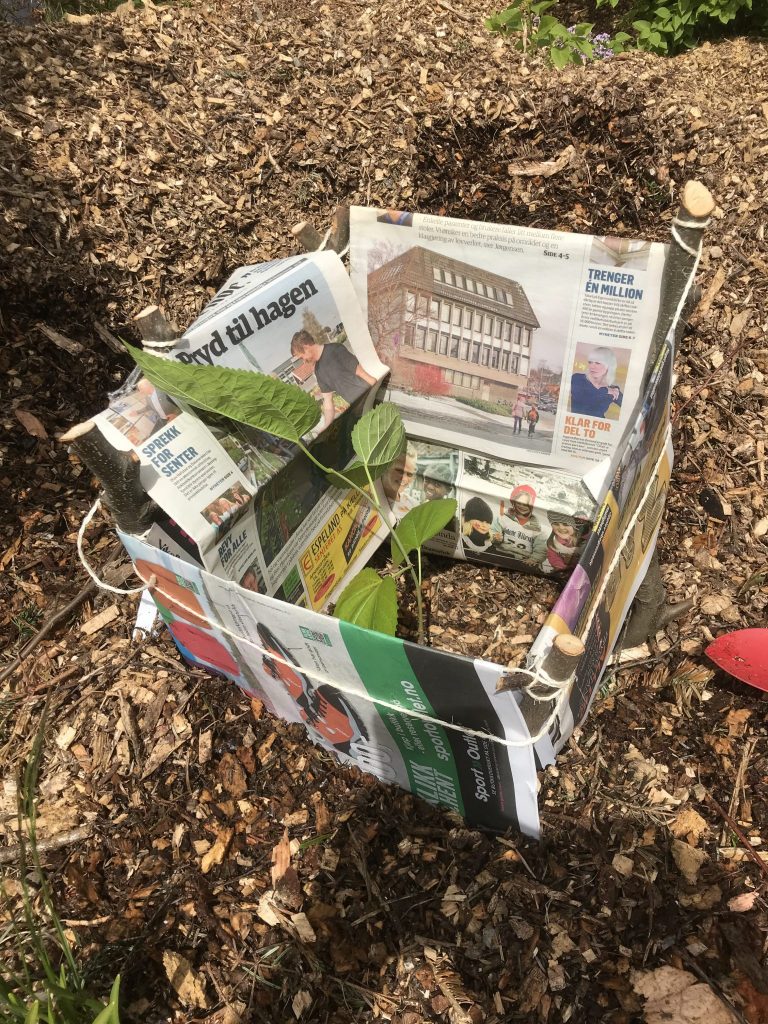
Quick and dirty windbreak to help the fresh mulberry grown from cutting

The reason I got these off eBay and not from a more local seller, got to support local when it’s possible, is that I couldn’t find anyone selling it.
More on how I choose where to buy things to grow in my garden in another page on my site: Where to get seeds

The two largest ones I’ve waited a bit longer to put into the ground.
The first of these last two I put in an area of our garden that can get a deal of wind so I attempted to give it a better chance of surviving the transplantation shock by making a makeshift windbreak.
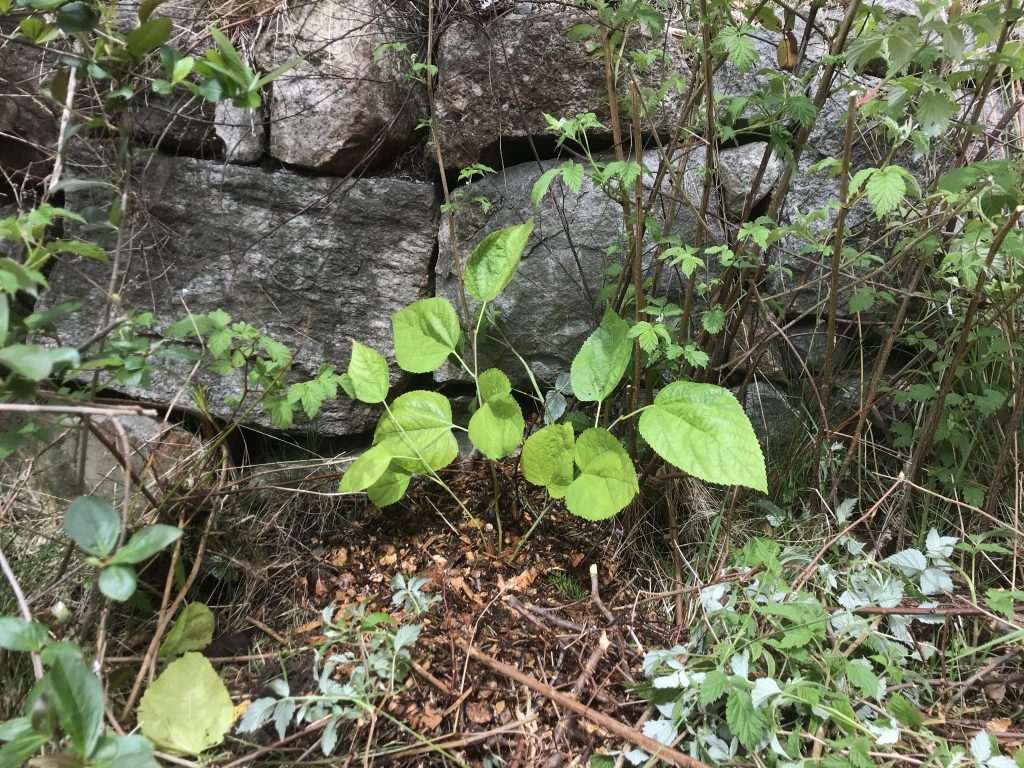
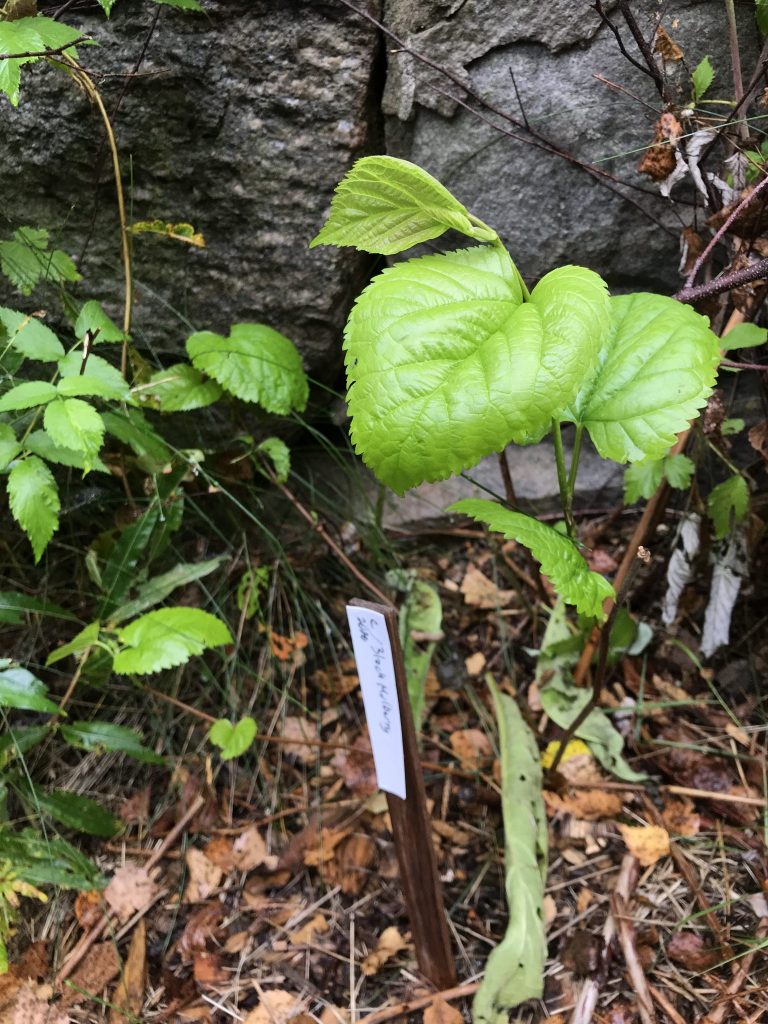
My last, and largest, mulberry planted against a stone wall that gets a lot of warm sun

This was how far they got towards the middle and end of May 2020.
I will update the progress as anything major happens.
Fruit can not form this year, from my understanding, as they don’t form on this year’s branches.

Mulberry lost leaves after transplant, makes a comeback
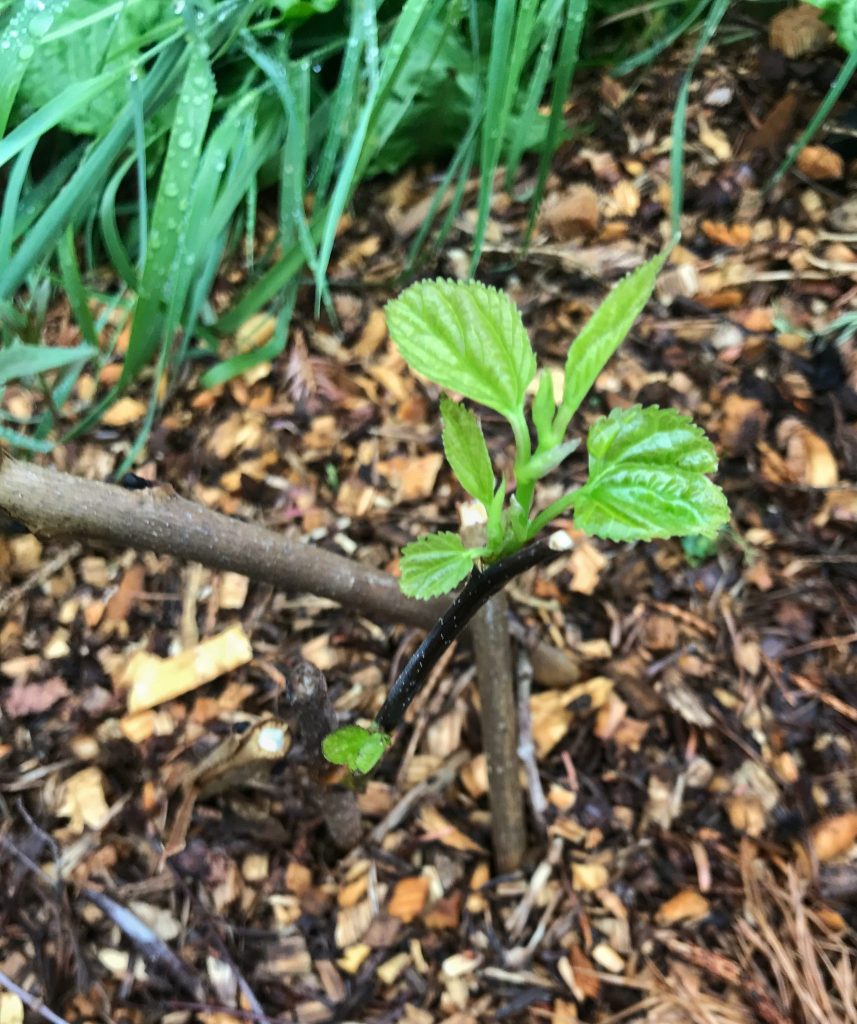
Mulberry came back after loosing leaves after transplant.
Photo taken on the 20th of June 2020. The two brighter sticks are just for support when I transplanted it, as the leaves were huge then. Wood chip mulch.

The first two I transplanted quickly lost their leaves, but I didn’t give up on them, and watered them during dry periods. After a few weeks, they seemed to wake up again (beginning of June). Their leaves are not as large as they were, but they seem strong.
The last two plants I transplanted have also started to lose their leave,s and it seems to have new leaves forming, so I’m not too concerned.
The weather has been quite good, warm, and unusually dry, but my heavy mulching and sporadic watering should be enough.

Situation end of September (first year)
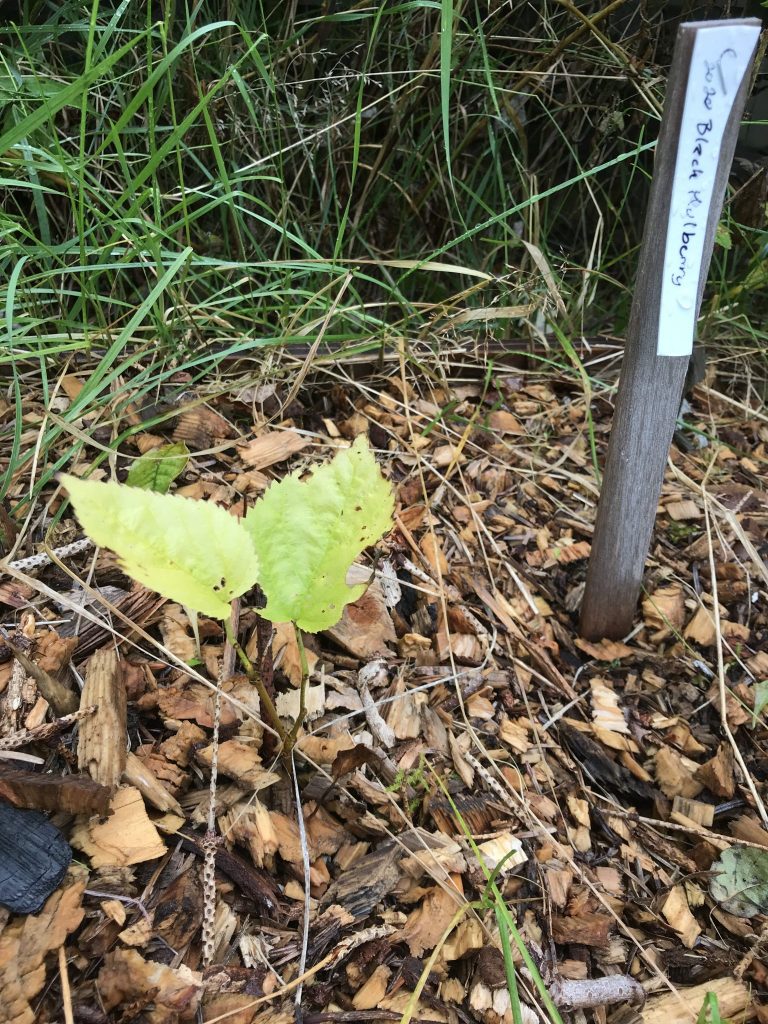
I planted the four plants in different locations on our property.
Shade, sun, wind, good soil, bad soil, well-drained soil, etc.
Given my lack of experience with this plant, I think it’s a good idea, as it increases the chances of at least a couple of them surviving the first winter.

Update on our first attempt at black Mulberries

Sadly, they all died during the winter of 2020/2021. Their first winter was very harsh; for a week, we had -15°C (5°F) with the lowest temperature reaching -17°C (1.4°F).
I’ve tried to find replacements for them and attempted to grow them from seed, but so far, no luck.
I did find some Red Mulberry trees online and got them in March of 2023.
Update: A New Batch of Black Mulberries (Summer 2025)

After losing my earlier Morus nigra during the winter of 2020/21, I decided to try again, this time with a more cautious strategy.

This current batch was grown in pots indoors throughout the winter, allowing them to develop in a stable, frost-free environment. They’ve now been moved outside for hardening off and will soon be transplanted. While the young plants exhibit typical leaf variation, one has deeply lobed foliage resembling a maple, while another displays broader, serrated leaves. This is, from what I’ve read, common among juvenile black mulberries and not a cause for concern.

Three black mulberry seedlings from seed: one with lobed leaves, one with serrated leaves, and one recovering from slug damage with new basal growth.
Leaf variation among black mulberry (Morus nigra) seedlings grown from seed. The seedling on the left displays deeply lobed leaves, while the center one shows broad, serrated foliage more typical of juvenile growth. The seedling on the right suffered early slug damage and lost its initial shoot but is now slowly recovering and putting out new leaves from the base, showing the species’ resilience.

I did take a chance last autumn and planted two of the seedlings directly into the ground. Unfortunately, they did not survive their first winter. At the time of transplanting, they had not yet developed the hard, woody trunks typical of more mature plants. This left them vulnerable to slugs, which eagerly devoured their soft leaves. I suspect the defoliation, combined with a short growing season, prevented them from storing enough energy in their roots to endure the Scandinavian winter.

Fortunately, I didn’t risk the entire batch. The remaining seedlings were overwintered indoors and have come through in excellent condition.

Given Morus nigra’s well-documented sensitivity to root disturbance, I’ve opted not to separate the seedlings when transplanting. Instead, I’ll move the entire pot as one unit into a larger container or planting hole, preserving as much of the root structure as possible. This should improve their chances of establishing successfully in the garden.


This website uses cookies. By continuing to use this site, you accept our use of cookies.